
Tres Leches is a popular Latin American dessert known for its rich, moist and indulgent qualities. This “three milk” cake has captivated taste buds around the world with its unique texture and flavor profile. In this article, we’ll explore what makes Tres Leches special, its origins, the three types of milk used, and more.
It means “three milks” in Spanish and is a biscuit soaked in a mixture of three milks. This dessert is known for its moist, creamy texture, which is achieved by soaking the cake in a combination of evaporated, condensed and whole milk. It’s a staple of Latin American cuisine and has gained international acclaim for its decadent taste.
In this article, we turn the kitchen into a classroom. We will explore the history of tres leches cake, the science behind its unique soak, and why Havana 1957 has become the mandatory stop for dessert lovers in Miami or Las Vegas.
The origin of Tres Leches
The exact origin of this dessert is somewhat controversial, but it is widely believed to have originated in Latin America. Many historians trace its roots to Nicaragua, where it was a popular dessert long before it spread to other countries in the region. The dessert’s rise in popularity can be attributed to its affordability and ease of preparation, making it a go-to option for celebrations and special occasions.
Evolution of the recipe
Tres Leches has evolved over time, with each region adding its unique twist to the traditional recipe. While the basic concept remains the same, variations have emerged as the dessert has spread throughout Latin America. The cake’s moistness and sweetness have made it a favorite for birthdays, weddings, and festive gatherings where its rich flavors are celebrated.
What makes Tres Leches unique: Key Ingredients
The unique texture and flavor of Tres Leches comes from its signature ingredients:
– Evaporated Milk: This milk is thickened through a process of evaporation that removes approximately 60% of its water content. It gives the cake a creamy consistency and a slightly caramelized flavor.
– Condensed Milk: This sweetened milk is concentrated and has a thick consistency. It gives the cake its characteristic sweetness and a smooth texture.
– Whole Milk: The addition of whole milk helps balance the richness of evaporated and condensed milk, keeping the cake moist without becoming overly sweet.
Together, these three types of milk create a sponge cake that is incredibly moist and flavorful, with a delicate sweetness that complements its creamy texture.
Texture and flavor profile
Tres Leches is celebrated for its unique texture that is both spongy and creamy. The cake absorbs the milk mixture, resulting in a dessert that is moist and rich, but not overly heavy. The flavor profile combines the sweetness of condensed milk with the subtle caramel notes of evaporated milk and the richness of whole milk, creating a harmonious balance that delights the palate.
Variations of Tres Leches
Throughout Latin America, tres leches is enjoyed in many different forms. In Mexico, for example, the cake is often topped with a layer of whipped cream and fresh fruit. In Nicaragua, it may be served with a sprinkle of cinnamon on top. Each region puts its own spin on the classic recipe, adding local flavors and ingredients to make it their own.
Modern twists
In recent years, chefs and home bakers have experimented with Tres Leches, incorporating innovative flavors and ingredients. Variations include adding fruits like mango or berries, infusing the cake with flavors like coffee or rum, or even creating Tres Leches cupcakes. These modern twists keep the dessert fresh and exciting while honoring its traditional roots.
How to make Tres Leches: traditional recipe
Making tres leches is relatively simple and starts with baking a simple sponge cake. Once baked and cooled, the cake is pierced with holes to allow the milk mixture to seep through. The mixture, consisting of evaporated, condensed and whole milk, is poured over the cake to allow it to absorb the liquid. After chilling for several hours, the cake is usually topped with whipped cream and garnished with fresh fruit or chocolate shavings.
Tips and tricks
For the perfect tres leches cake, make sure the sponge is completely cooled before adding the milk mixture. This will allow the cake to absorb the liquid evenly without becoming too soggy. Also, letting the cake sit in the refrigerator overnight will enhance the flavors and ensure that it is completely chilled before serving.
The Havana 1957 Difference: A unique experience
While you can find this dessert in many places, finding the best Tres Leches Miami or Las Vegas requires a visit to Havana 1957. We don’t just serve the cake; we honor the tradition.
At our locations on Española Way, Ocean Drive, Lincoln Road, Pembroke Pines and Las Vegas we have perfected the balance that many miss.
What makes our Tres Leches unique?
- The Sweetness Level: Many versions are cloyingly sweet. Ours is balanced, allowing the flavor of the fresh dairy and the vanilla sponge to shine through.
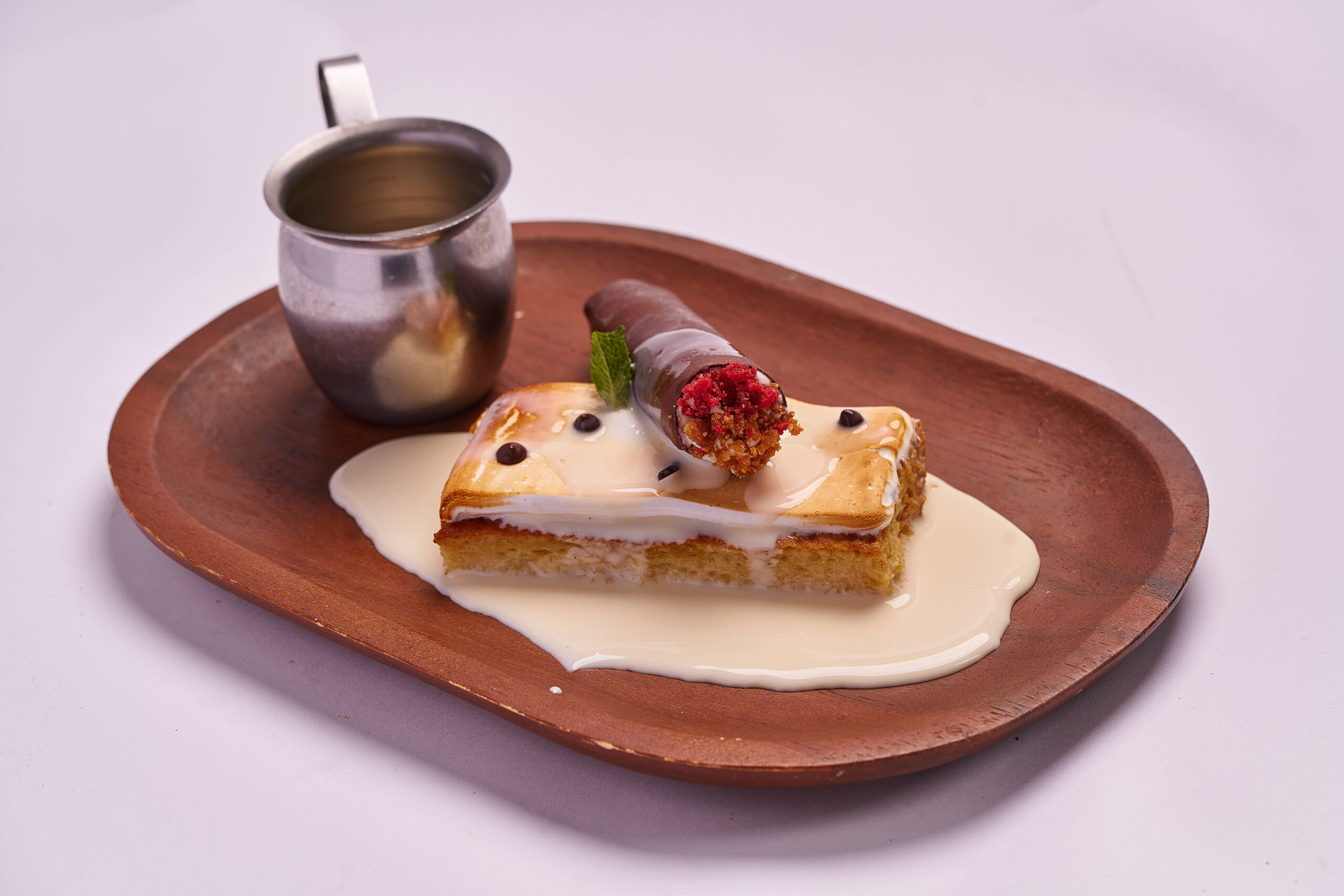
- The Topping: Resting atop the cake is a handcrafted chocolate “habano”. This isn’t just decoration. It is a nod to the iconic cigar culture of 1950s Cuba. The chocolate shell provides a satisfying “snap” that contrasts with the softness of the sponge.
- The Presentation: It is not just a slice; it is a centerpiece.
The Ritual: Prepared at Your Table
The biggest fear with Tres Leches is the texture—no one wants a mushy cake. In Havana 1957, we solved this with theater.
When the dessert arrives, it is presented with a silver pitcher on the side. The three milks blend is poured tableside, right before your eyes.
- Why does this matter? It ensures that the sponge absorbs the liquid seconds before you take your first bite.
- The Result: You experience the perfect equilibrium—a cake that is fully saturated and creamy, yet maintains its structural integrity. It is fresh, interactive, and undeniably “Instagrammable
Experience the Sweetness of Cuba
Whether you are a lifelong fan of Latin sweets or trying it for the first time, Havana 1957 invites you to experience the dessert that defines a culture. It is the perfect finale to a meal of Ropa Vieja or just a treat to enjoy with a strong Cuban coffee.
Don’t just read about the history—taste it. Book your table here.